Moose Boy character illustration holding an 'I AM MOOSE BOY' sign - the famous silicon graffiti mascot found in Nokia 5190 chips

I'm Moose Boy: The Legendary Silicon Graffiti

A microscopic masterpiece hidden inside millions of Nokia 5190 phones—the most famous silicon graffiti in tech history. I am Moose Boy — discover the legend.

Essential Tools for Your Moose Boy Quest

Ready for an adventure? Discovering Moose Boy demands meticulous disassembly and microscopic analysis along with substantial patience. Here are the critical tools you'll require for your silicon graffiti expedition. Success cannot be guaranteed!

If you click on affiliate links on this website and make a purchase, we may earn a commission at no additional cost to you.

Complete Guide to Discovering Moose Boy

1

Acquire a Nokia 5190

Begin by securing a Nokia 5190 phone. Not every unit houses Moose Boy—the chip only appeared in select production batches from earlier manufacturing runs. Seek phones produced in the late 1990s for the highest probability of locating the doodle.

2

Disassemble the Phone

Methodically remove the rear cover, battery, and faceplate. Utilize your precision instruments to unscrew and detach the phone's housing. Capture photos at every stage so you can rebuild it later if wanted. Proceed slowly to prevent damaging plastic fasteners.

3

Locate the Crystal Oscillator

After you gain access to the main PCB (printed circuit board), pinpoint the crystal oscillator part—a compact silver rectangular or square metal container, usually marked with frequency specifications. Moose Boy is concealed on a Motorola RF chip within this oscillator casing.

4

Remove the Oscillator

Fasten the PCB in your vice grip. Warm your soldering iron to approximately 350-400°C (660-750°F). Place the tip onto each solder connection on the crystal oscillator while concurrently using the desoldering pump to remove the liquefied solder. After all connections are cleared, use precision tweezers to carefully lift the part from the board. Operate patiently and avoid applying too much heat to prevent PCB harm.

5

Open the Oscillator Housing

The crystal oscillator features a metal shell safeguarding the chip within. Using your precision razor blade and tweezers, cautiously pry open or slice through the metal enclosure. This demands delicate work—the chip inside is minuscule and brittle. Exercise patience.

6

Examine the Chip Under Magnification

With the chip revealed, position it beneath your USB microscope or desk magnifying glass with adequate lighting. Moose Boy is microscopic—you'll require at least 100-200x magnification to observe it distinctly. Search for the doodle on the silicon surface: a boy figure with moose antlers clutching a sign that reads "IM MOOSE BOY."

7

Document Your Discovery

If you successfully locate Moose Boy, capture photos or video through your microscope! This represents a scarce piece of engineering heritage. Numerous collectors and tech fans have investigated for years to authenticate this silicon graffiti legend. Distribute your findings with the community!

Safety and Legal Cautions

  • • Soldering irons achieve very high temperatures and can inflict serious burns. Always employ proper safety gear and operate in a properly ventilated space.
  • • Sharp implements like razor blades can result in injury. Manage with maximum care and keep away from children.
  • • Not every Nokia 5190 phone houses the Moose Boy chip—success cannot be assured even with meticulous work.
  • • Dismantling electronic devices can expose you to tiny parts and substances. Operate carefully and responsibly.
  • • This process irreversibly destroys the phone's functionality—use only salvage or broken units.
Editorially reviewed

What is Moose Boy?

Moose Boy stands as one of the most renowned instances of silicon graffiti (sometimes called chip art or silicon doodling)—minuscule, concealed artwork carved into computer chips by their creators. This specific artwork, depicting a boy with moose antlers clutching a sign that proudly declares "I'M MOOSE BOY" (sometimes written as "IM MOOSE BOY" or "I AM MOOSE BOY"), was covertly placed within the Motorola RF integrated circuit housed inside a crystal oscillator of the legendary Nokia 5190 mobile phone, launched in 1998 and often dubbed "the iPhone of 1999" because of its extraordinary popularity.

Tiny Technical Marvel

Completely invisible without magnification, this design is created through the identical photolithography technique used for the chip's operational circuitry

Designer's Personal Mark

A humorous signature or private reference created by chip engineers—a custom stretching back many decades

The Nokia 5190: Cultural Icon

The Nokia 5190 (alternatively marketed as the 5110 in certain regions) was far more than an ordinary phone—it became a cultural touchstone. Launched in 1998, it evolved into one of the best-selling cellphones of that generation, celebrated for being nearly indestructible, straightforward to operate, and boasting remarkable battery longevity. It brought millions into mobile gaming through the iconic game Snake, and pioneered phone customization through its swappable faceplates.

Measuring 1.2 inches in thickness, what contemporary standards would label a "brick" was viewed as streamlined and contemporary in 1999. Production of the phone ceased around 2001, yet its influence endures—not only as a watershed moment in mobile communication development, but as the home of one of technology's most celebrated Easter eggs.

The 2022 Hunt

The search for Moose Boy kicked off seriously in 2022, when internet references mentioned its presence somewhere inside a Nokia 5190 phone. The revelation triggered a community-powered treasure hunt among technology fans, chip enthusiasts, and mobile phone archivists. Following a video from @Exciting__Electronics showcasing chip art within a crystal oscillator, hunters revisited their Nokia 5190 salvage PCBs with fresh determination.

The pivotal moment: Moose Boy was ultimately discovered on a chip within the crystal oscillator of select Nokia 5190 models—not on the primary PCB, but concealed one layer deeper, rendering it even more challenging to locate than initially anticipated.

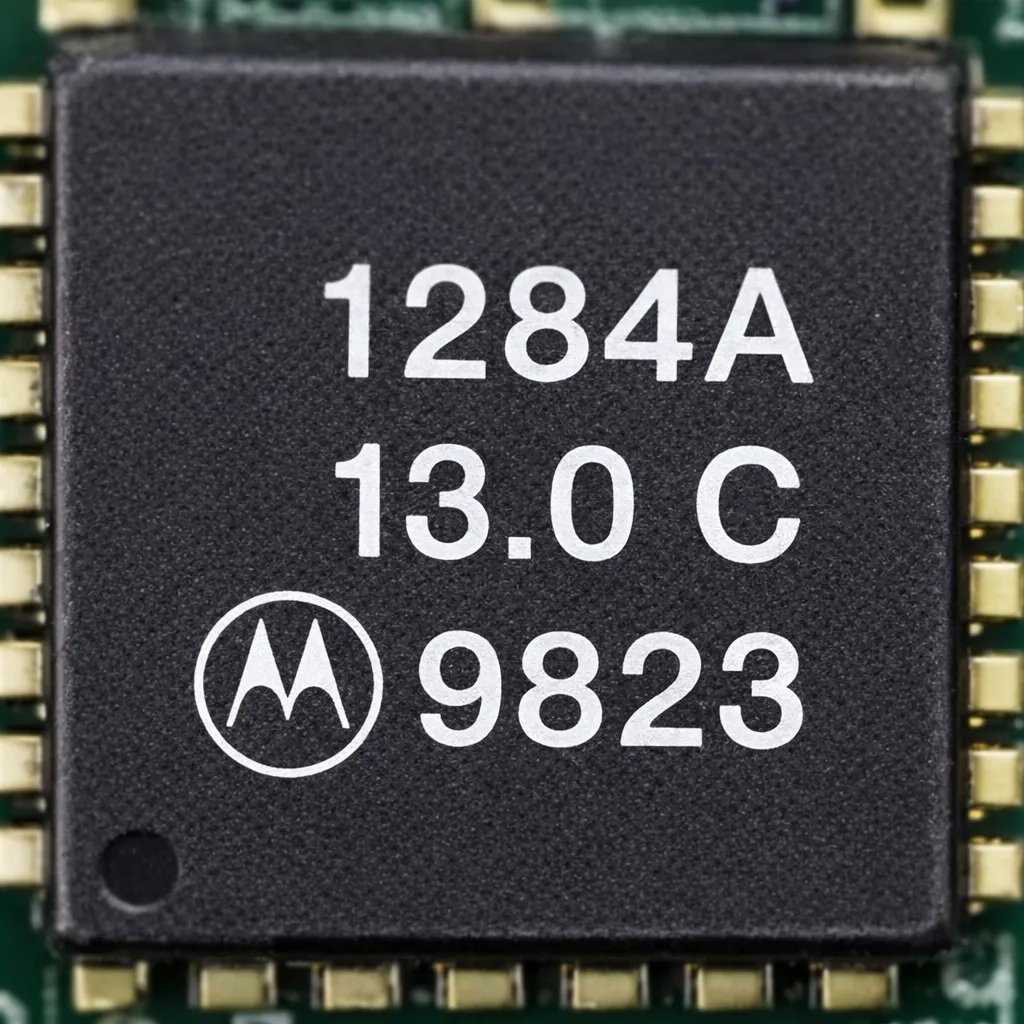
The Specific Chip

Motorola crystal oscillator chip with markings 1284A, 13.0 C, Motorola logo, and date code 9823

Moose Boy seems to be concealed in crystal oscillator chips bearing markings such as "1284A", "13.0C", and "9823". These identifiers provide crucial details about the chip:

  • 1284A - The component number or model designation for this particular chip version
  • 13.0C - Probably denotes the oscillator frequency (13.0 MHz) or an associated specification
  • 9823 - Production date code in YYWW format, signifying this chip was produced in 1998, week 23 (early June 1998)

Note: Not all crystal oscillators in Nokia 5190 phones contain Moose Boy—only certain production runs with this specific chip variant may have the hidden doodle.

Locating Moose Boy demanded:

  • Complete disassembly of a Nokia 5190 phone to reach the crystal oscillator
  • Opening the crystal oscillator enclosure itself—not merely inspecting the main circuit board
  • Employing specialized microscopy tools with hundreds of times magnification
  • Obtaining an "old enough" Nokia 5190—not every production batch includes the doodle

Origins & Inspiration

The "Moose" Connection

The artwork is thought to be based on a chip engineer's friend or associate nicknamed "Moose," demonstrating evident artistic influence from the iconic Big Boy restaurant mascot with its recognizable proportions and appealing design.

Part of a Rich Tradition

Moose Boy becomes part of a collection of silicon Easter eggs featuring a can of worms, chili peppers, Daffy Duck, Smurfs, Playboy bunnies, and assorted animals—cataloged in archives like the renowned Silicon Zoo.

Silicon Graffiti: A Dying Art

Prior to 1984, silicon graffiti fulfilled a functional legal role—these concealed signatures offered proof of copyright infringement if a rival duplicated a chip design. The Semiconductor Chip Protection Act of 1984 granted automatic protection to chip mask designs, transforming the purpose for doodles mainly to personal expression, team recognition, and inside jokes.

Chip engineers would utilize vacant space on prototype chips to leave their signature, producing these microscopic artworks through the same photolithography process used for the functional circuitry. Yet, this custom has grown progressively uncommon due to:

  • More rigorous corporate guidelines concerning intellectual property and optimizing silicon real estate
  • Heightened security oversight in semiconductor production
  • Contemporary automated design workflows that offer less opportunity for personal flourishes
  • Every micron counts—as chips grow more sophisticated, there's diminished unused space for art

Why Moose Boy Matters

Moose Boy signifies more than simply a concealed doodle—it's evidence of the human ingenuity and character behind the technology that linked the world. In a time where billions of chips are produced with mechanical precision, these Easter eggs show us that actual people with whimsical spirits engineered the devices that transformed how we communicate.

The Nokia 5190 delivered mobile communication to millions and transformed into a cultural symbol of the late 1990s. That such a globally meaningful device held this secret artistic signature—concealed within a component inside another component—makes Moose Boy an invaluable piece of technology history and digital archaeology.

Collecting Nokia 5190 Phones

For vintage mobile phone collectors and technology aficionados, the Nokia 5190 has evolved into a coveted piece of history. Not every Nokia 5190 houses Moose Boy—you require an "old enough" model from the initial production batches with the particular Motorola chipset. This scarcity makes authenticated units especially valuable to collectors.

Whether you're a collector, a technology archivist, or just someone captivated by the crossroads of art and engineering, owning a Nokia 5190 means having a tangible piece of this legendary story—and potentially, with the appropriate equipment and dedication, the opportunity to see Moose Boy yourself.

Watch Moose Boy in Action

See the legendary silicon graffiti brought to life and revealed under microscope magnification

What Moose Boy is Really Doing Inside Your Nokia 5190 Chip

An animated look at what Moose Boy gets up to when nobody's watching — running around the Motorola RF chip inside the Nokia 5190, resoldering connections and keeping things running.

The Original Moose Boy Discovery

This video captures the painstaking process of locating and photographing the microscopic Moose Boy doodle on the Motorola RF chip inside a Nokia 5190 phone. The discovery required specialized equipment and precise knowledge of where to look on the silicon die.

Find Authentic Nokia 5190 Phones

Own a piece of mobile phone history and potentially discover the legendary Moose Boy hidden inside

Nokia 5190 Phone
Find vintage Nokia 5190 phones from the late 1990s that may contain the legendary Moose Boy chip
  • Vintage 1990s models
  • Authentic Nokia hardware
  • Collector's items

Buying Tips for Collectors

  • Verify authenticity: Look for genuine Nokia branding and model numbers
  • Check seller ratings: Buy from reputable sellers with positive feedback
  • Read descriptions carefully: Understand the phone's condition and what's included
  • Original hardware matters: For the Moose Boy chip, you need phones with original Motorola components

Frequently Asked Questions

Everything you need to know about the legendary Moose Boy silicon graffiti

Sources & References

Our research draws from primary sources, community documentation, and historical archives. We verify all information across multiple sources to ensure accuracy.

  1. [1]
    Mooseboy Silicon Art — [H]ard|Forum (2006)

    Early internet discussion documenting the Moose Boy chip art discovery

  2. [2]
    Silicon Zoo — Chip Art Archive

    Comprehensive archive of silicon graffiti and chip art specimens

  3. [3]
    Chip Art (Silicon Graffiti) — Wikipedia

    Overview of the history and tradition of hidden artwork on semiconductor chips

  4. [4]
    Semiconductor Chip Protection Act of 1984

    The legislation that changed the legal purpose of silicon graffiti

  5. [5]
    Moose Boy Discovery — EvilMonkeyz TikTok

    The viral video documenting the 2022 hunt and discovery of Moose Boy

  6. [6]
    Exciting Electronics — Crystal Oscillator Chip Art

    The video that inspired hunters to revisit Nokia 5190 oscillator components

About This Site

I Am Moose Boy is a dedicated resource for technology historians, vintage mobile phone collectors, and anyone fascinated by the hidden artistry in semiconductor design. This site was created by technology enthusiasts with deep appreciation for silicon graffiti and the Nokia 5190's cultural impact.

Our Mission

We aim to preserve and share the remarkable story of Moose Boy—one of tech history's most beloved Easter eggs. Through thorough research and community collaboration, we document the 2022 discovery hunt, the Nokia 5190's significance, and the dying art of silicon graffiti.

Our Research

Our content is built on extensive research from primary sources including the 2022 discovery community discussions, historical documentation about the Nokia 5190, semiconductor industry history (including the Semiconductor Chip Protection Act of 1984), and insights from chip collectors and technology historians. We carefully verify all information to provide accurate, comprehensive coverage of this fascinating topic.

Affiliate Transparency

We participate in the eBay Partner Network to help collectors find authentic Nokia 5190 phones. When you purchase through our affiliate links, we may earn a small commission at no additional cost to you. This helps us maintain the site and continue researching technology history. We only link to products we believe are authentic and valuable to collectors—our editorial content is never influenced by affiliate relationships.

Editorial Standards

All content on this site is researched and verified against multiple primary sources before publication. We clearly distinguish between confirmed facts and community speculation, and we update our content whenever new information becomes available. Our affiliate recommendations are based solely on relevance to the Moose Boy discovery process — editorial content is never influenced by commercial relationships. If you spot an error or have additional information about Moose Boy, we welcome corrections.